Be yourself; Everyone else is already taken.
— Oscar Wilde.
This is the first post on my new blog. I’m just getting this new blog going, so stay tuned for more. Subscribe below to get notified when I post new updates.
Be yourself; Everyone else is already taken.
— Oscar Wilde.
This is the first post on my new blog. I’m just getting this new blog going, so stay tuned for more. Subscribe below to get notified when I post new updates.
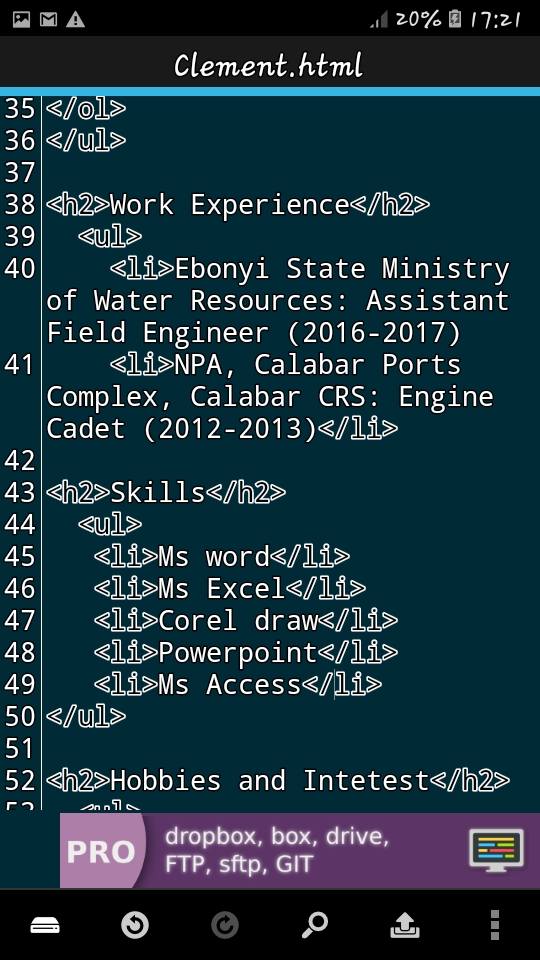
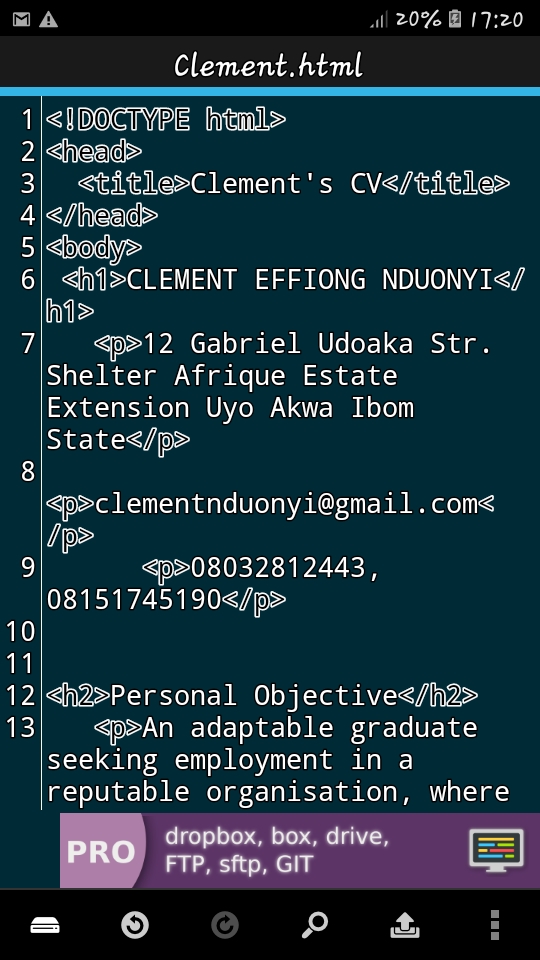
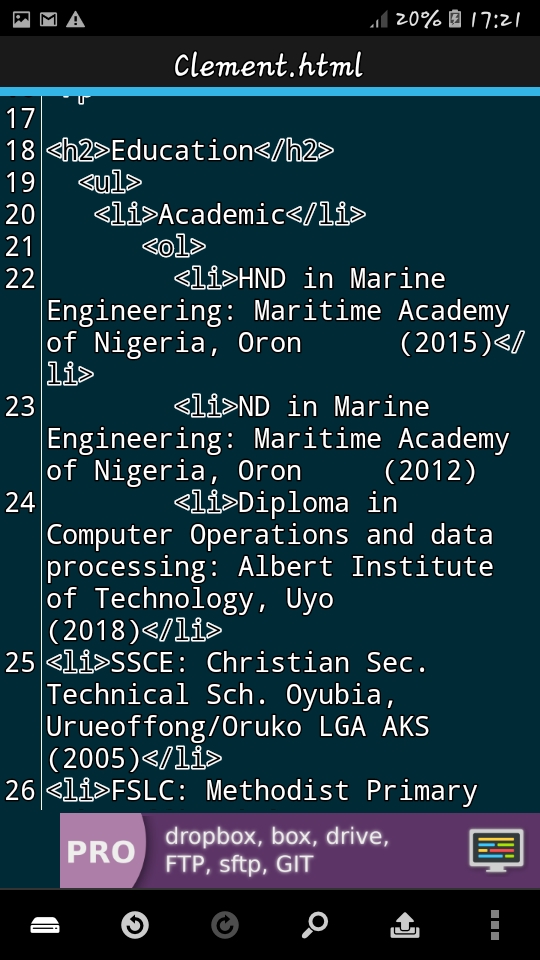
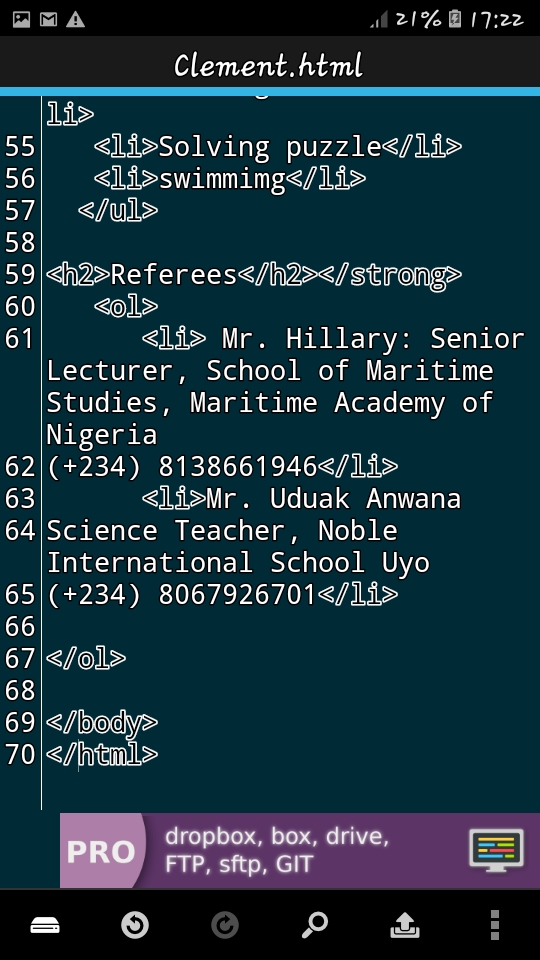
I have always had very strong affinity to coding but you know what? FEAR of how to just get started has been keeping potentials and passion locked up. But now the startng Internship as actually unlock those potentials and help me conquer those fears. Now I have started coding in just few days of learning/mentorship. I am beginning to have clear and good understanding of html (hypertext markup language) , the core or bedrock of the World Wide web.
I have been able to create a single html page containing the content of my CV well arranged. I have learned about some common html terms such as element, tag, div, head, body, tiltle etc. Learned some skills like how to open and close tags, create ordered/unordered list, input, tables, comment, html document structure and lot more and still counting. It has’nt been a dole moment with @startdotng. Thank you guys for the great job thus far. The progress I have made so far is simply amazing.
Tourism is travel for leisure, recreational and business purpose. Tourists can be defined as people who travel to and stay in places outside their usual surroundings for more than twenty-four hours and not more than one consecutive year for leisure, business and other purposes by the World Tourism Organization. Tourism is a known affair in human life. It has been an industry of vast dimensions and eventually supports economic and social growth. Tourism worldwide has experienced phenomenal growth. With more than 600 million people travelling annually, tourism is the world’s largest industry, with revenues of about half a trillion dollars a year, and averaging five percent annual growth. Read more @ https://timbu.com/india
India, being a vast and diverse country has always something to offer, and its glorious traditions and rich cultural heritage are linked with the development of tourism. Its magnificent monuments attract large numbers of visitors from all over the world. Tourism is the largest service industry in India, with a contribution of 5.68% of the national GDP and 8.78% of the total employment in India. India witnesses’ more than 13.72 million annual foreign tourist arrivals and 650 million domestic tourist visits. The tourism industry in India generated about US$ 100 billion in 2008 and is expected to increase to US$ 275.5 billion 2018 at a 9.4% annual growth rate.
Booming IT industry and outsourcing industry has led to growing number of business trips made by foreigners to India, who often add a weekend break or longer holiday to their trip. Foreign tourist spends more in India than almost any other country worldwide. Tourist arrivals are projected to increase by over 22% per year through till 2010. Tourism minister has also played an important role in the development of the industry, initiating advertising campaigns such as the ‘Incredible India’ campaign, which promoted India’s culture and tourist attractions in a fresh and memorable way. This campaign helped create a colourful image of India in the minds of tourists all over the world and directly led to an increase in the interest among tourists.
The tourism industry has helped growth in other sectors as diverse as horticulture, handicraft, agriculture, construction and even poultry.
Both directly and indirectly, increased tourism in India has created jobs in a variety of related sectors. Almost 20 million people are now working in the India’s tourism industry.
Growth Of Hospitality Industry In India
The hotel industry in India is going through an interesting phase. One of the major reasons for the increase in demand for hotel rooms in the country is the boom in the overall economy and high growth in sectors like information technology, telecom, retail and real estate. Rising stock market and new business opportunities are also attracting hordes of foreign investors and international corporate travellers to look for business opportunities in the country.
The hotel industry in India is going through an interesting phase. The industry has a capacity of 110,000 rooms. According to the tourism ministry, 4.4 million tourists visited India last year and at the current rate, the demand will soar to 10 million by 2010 to accommodate 350 million domestic travellers. The hotels of India have a shortage of 150,000 rooms fuelling hotel room rates across India. With tremendous pull of opportunity, India has become a destination for hotel chains looking for growth.
Due to such a huge potential available in this segment, several global hotel chains like the Hilton, Accor, Marriott International, Berggruen Hotels, Cabana Hotels, Premier Travel Inn (PTI), InterContinental Hotels group and Hampshire among others have all announced major investment plans for the country. The Government’s move to declare hotel and tourism industry as a high priority sector with a provision for 100 per cent foreign direct investment (FDI) has also provided a further impetus in attracting investments in to this industry.
It is estimated that the hospitality sector is likely to see US$ 11.41 billion rise in the next two years, with around 40 international hotel brands making their presence known in the country by 2011. Simultaneously, international hotel asset management companies are also likely to enter India. Already, US-based HVS International has firmed up plans to enter India, and industry players believe others like Ashford Hospitality Trust and IFA Hotels & Resorts among others are likely to follow suit.
This is an example post, originally published as part of Blogging University. Enroll in one of our ten programs, and start your blog right.
You’re going to publish a post today. Don’t worry about how your blog looks. Don’t worry if you haven’t given it a name yet, or you’re feeling overwhelmed. Just click the “New Post” button, and tell us why you’re here.
Why do this?
The post can be short or long, a personal intro to your life or a bloggy mission statement, a manifesto for the future or a simple outline of your the types of things you hope to publish.
To help you get started, here are a few questions:
You’re not locked into any of this; one of the wonderful things about blogs is how they constantly evolve as we learn, grow, and interact with one another — but it’s good to know where and why you started, and articulating your goals may just give you a few other post ideas.
Can’t think how to get started? Just write the first thing that pops into your head. Anne Lamott, author of a book on writing we love, says that you need to give yourself permission to write a “crappy first draft”. Anne makes a great point — just start writing, and worry about editing it later.
When you’re ready to publish, give your post three to five tags that describe your blog’s focus — writing, photography, fiction, parenting, food, cars, movies, sports, whatever. These tags will help others who care about your topics find you in the Reader. Make sure one of the tags is “zerotohero,” so other new bloggers can find you, too.

 Cndigitech